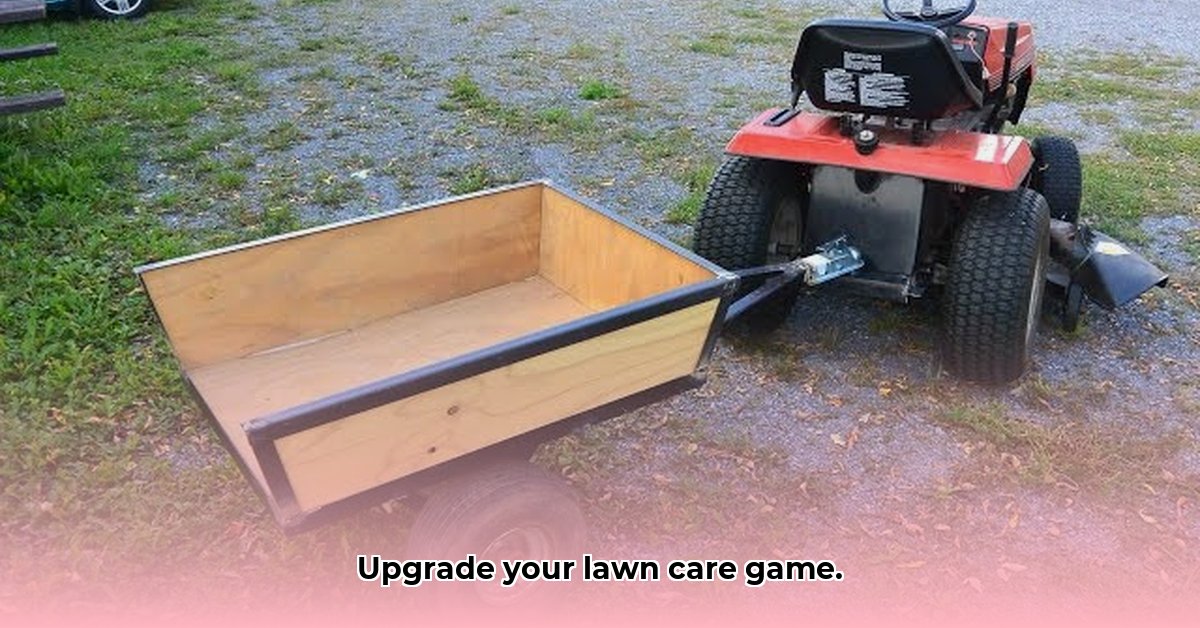
Choosing the Right Cart: A Step-by-Step Guide
Selecting the right cart for your lawn tractor can significantly improve your farm's efficiency and sustainability. This guide provides a practical, step-by-step approach to finding the perfect cart for your needs. Don't just move materials; optimize your workflow! For more information on lawn tractor hitches, check out this helpful resource.
1. Assess Your Hauling Needs:
Before shopping, determine your primary hauling tasks. Will you primarily move soil, harvest produce, or transport tools? Estimate the typical weight and volume of your loads. A heavier load necessitates a more robust cart, while lighter loads allow for a more maneuverable option. Consider the size and shape of typical items – will you be carrying bulky materials or smaller, delicate items? What are your peak transportation needs? Knowing exact volume requirements is essential for determining capacity. Do you anticipate significant seasonal variations in hauling needs?
2. Consider Your Terrain:
The terrain significantly impacts cart choice. Flat land allows for lighter carts, while hilly terrain requires a sturdier option with larger wheels and better stability. Are there obstacles or tight spaces? Maneuverability becomes critical in such situations. Do you often haul over soft ground such as muddy fields? This requires larger, more robust wheels, potentially even low-pressure pneumatic tires. How far will you be hauling materials? This affects your cart’s need for features like comfort for the operator.
3. Choose the Right Cart Type:
Several cart types cater to different needs.
Dump Carts: Ideal for moving large quantities of loose materials (soil, compost). Their self-dumping mechanism saves time, but they lack the versatility of other options.
Garden Carts: Offer all-around versatility, handling various loads and maneuvering easily. This is often the best pick for many farms.
Utility Carts: Robust workhorses designed for heavy-duty applications. They're less specialized than dump or garden carts but provide exceptional durability.
4. Evaluate Cart Materials:
A cart's material significantly influences its durability and environmental impact.
Steel: Durable and strong, but heavier and can rust. Steel production has a relatively high carbon footprint when compared to some other choices.
Plastic/Poly: Light and easy to maneuver, resistant to rust, and generally more economical. However, they may be less durable in rough conditions. Recyclability varies greatly depending on the type of plastic.
Wood: Eco-friendly if sourced sustainably, but requires regular maintenance and might not be as durable as steel or high-quality plastics.
5. Prioritize Ergonomics and Safety:
Ease of use and safety are paramount. Look for ergonomic handles, adjustable height options, appropriately sized wheels, suitable for your terrain, and safety features such as brakes and reflective tape, especially for low-light operation. Is the cart easy to load and unload? This can impact both your physical comfort and your operational efficiency.
6. Focus on Sustainability:
Consider the cart's entire lifecycle: production, transport, use, and disposal. Choose carts made from recycled materials or sustainably harvested wood. A durable cart minimizes waste and reduces the need for frequent replacements. “The best cart is the one you don't have to replace,” states Dr. Emily Carter, Agricultural Engineer at Cornell University. Supporting local businesses can minimize transportation emissions and bolster your local economy. Does the manufacturer offer repair services or replacement parts? A cart you can repair instead of replacing greatly increases its lifespan and reduces waste.
7. Consider Additional Features:
Consider features that enhance functionality and efficiency. Larger wheels typically improve rough-terrain performance. Pneumatic tires offer smoother rides while solid rubber tires are more durable but harsh on uneven ground. A tilting bed simplifies unloading, and robust construction increases longevity. Removable sides or mesh walls add versatility. Consider features that make the cart easy to use for extended periods - properly sized hand grips, and any additional comfort features.
8. Make an Informed Decision:
Choosing the right cart requires a careful assessment of your needs, terrain, and sustainability goals. A thoughtful choice boosts your farm's efficiency and minimizes your environmental impact. Remember to weigh short-term costs against the long-term benefits of a durable, sustainable cart. Are there local suppliers offering similar options, enabling you to reduce transport costs and support your local community?
Key Takeaways:
- Selecting the right cart dramatically affects farm efficiency and sustainability.
- Cart material significantly impacts durability and environmental impact.
- Prioritize ergonomic design and safety features for ease of use and reduced risk of injury.
- Consider the cart's entire life cycle, choosing durable, repairable options to minimize waste.
By following these steps, you can select a lawn tractor cart that optimizes your farm's efficiency and aligns with your sustainability goals.